|
January 14, 2019 - It's been awhile since I've posted to this site but I'd like to share this. A request was made by Pearson International to use 400-500 words from my book, The Reluctant Canadian for an educational publication that they are compiling. I don't know what part of the book they will take from but I am pleased to know that my work is considered worthy of inclusion. Pearson Global Schools is a team of dedicated educational specialists, based in over 70 countries who work with schools around the world.
NDP leader Thomas Mulcair speaking about gay veterans that were kicked out of the military "it's a historical mistake; historical mistakes can be corrected with an apology." I wonder what his stance is on the BHC historical mistake? ~~~~~~~~~~~~~~~~~~~~~~~~~~~~~~~~~~~~~~~~~~~~~~~~~~~~~~~~~~~~~~~~~~ I had a great visit in Ontario last weekend--spent all day Saturday at Upper Canada Village participating in the BHC events (Sept. 28 in BHC day in Ontario). I had the opportunity to meet many great people--many of them BHC descendants, as well as two authours that have penned books relating their connection to the BHC story. The attached pic is of myself with (L) Sandra Joyce (The Street Arab) and Beryl Young (Charlie). My thanks to everyone who made me feel welcome and part of the BHC family. ~~~~~~~~~~~~~~~~~~~~~~~~~~~~~~~~~~~~~~~~~~~~~~~~~ P.M. Harper has declared that a formal apology to the British Home Children and their descendants is in-fact, necessary. In fact, his speech has already been written. The following is the speech made by P.M. Harper to the Canadian Chinese community on June 22, 2006. I have high-lighted Mr. Harpers arguments for an apology to the B.H.C. ------------------------------------------------------------- 22 June 2006 Ottawa, Ontario Notes for an Address by The Right Honourable Stephen Harper Prime Minister of Canada Good afternoon Honoured guests, Colleagues from the House of Commons and the Senate, Canadians. It gives me great pleasure to be with you here today. Before I begin, I would like to take a moment to offer my thanks to the surviving head tax payers, their spouses, and the large number of family members who are with us here today. I know many of you have travelled great distances to join us, and we are grateful that you have made the journey to witness this important day. I would also like to offer my gratitude to the Minister of Canadian Heritage, the Honourable Bev Oda, and to my Parliamentary Secretary, Jason Kenney. Today’s apology is in no small part due to their hard work and determination to see us right this historic wrong. Today is an important day. – One on which we turn the page on a sad period of our history. – Allow for the healing of our national conscience to begin. – And move forward as one nation. Canada is a great country. Strong, united, independent and free. A nation that is: – Prosperous. – Diverse. – Beautiful. – And fair. It’s why so many have come to our land. And why so many more seek to come here. But at times in our history, we, like others, have made mistakes. Sometimes serious ones. **When this occurs, it is necessary to own up to the fact.** That is what our government did today by issuing a formal apology to the Chinese-Canadian community for the head tax. – And by expressing our deepest regret for the exclusion act. The measures were shameful. They separated families. They caused great financial hardship. And they discriminated against people – for no reason other than they were different. – People who had made the difficult decision to leave behind their loved ones and their homeland for a country halfway around the world. A tremendous sacrifice by any measure. And one for which they were neither commended nor thanked. But rather, punished. These proud, hard-working Chinese newcomers were subjected to the humiliation of having to pay a head tax. The head tax may lie decades back in our past. But its effects linger on in the Chinese-Canadian community to this day. A fact that was powerfully conveyed to me when I met with a group of head tax survivors recently in Vancouver. The experiences and memories shared affected me deeply. Theirs were stories of: Sacrifice, deprivation and determination; as well as Triumph over adversity. These people came to Canada to work hard and to have a better life. And in so doing, to help build a stronger, better Canada for all of us. Over the years, Chinese-Canadians have amassed an enviable record of accomplishments. A fact I am reminded of as I stand here in the railway room, which served as the home for the parliamentary committee that dealt with railways. A place that is particularly fitting since Chinese workers played such a large role in the building of Canada’s railways. The most important being the Canadian pacific. Begun in 1881, and completed four years later, this transcontinental link was the iron backbone that bound our fledgling country together. It was largely responsible for the settlement of the west. And it played a key role in the development of the Canadian economy. Simply put, the Canadian pacific railway helped make the Canada we know today. And its construction would not have been possible without the efforts of thousands of Chinese labourers. These men, however, were not thanked. Nor were their labours commended. Rather, in an attempt to deter further Chinese immigration, the government of the day implemented the head tax. To try and keep them out. It was an unconscionable act. An act for which Canadians are deeply sorry. Canada is infinitely richer because of the contributions Chinese-Canadians have made and continue to make. From Vancouver, through the Prairies, to Toronto, Montréal and beyond, Canadians of Chinese descent have strengthened every community in which they have settled. Your work ethic.Your commitment to family and country. Your spirit of entrepreneurship. These are the qualities that have helped shape Canada in the past, and will lead us forward in the 21st century. A country that is strong. One that is independent. And one that is confidently taking its rightful place on the international stage. **But before we can all move forward together as Canadians and achieve our full potential, we must first lay to rest the past wrong** of the head tax. Today’s apology – along with individual and community redress actions - will not erase the painful memories for which these past measures are responsible. But it will allow for the healing process to begin. – Allow us to unshackle ourselves from the burden of the past. – So we can join together in moving Canada forward. **I sincerely hope today’s apology will provide you with some measure of closure**. **And a sense that justice has finally been done.** Thank you. God bless Canada. The highlights that I made in this speech are not meant to diminish, in any way, the necessity or legitimacy of the governments apology to Chinese Canadians for the head tax. It is only meant to demonstrate the similarity between two "sad periods of our history." As Mr. Harper himself noted, "when this occurs, it is necessary to own up to the fact." In fact, there have been other "sad periods" in Canada's history that have, and justifiably so, deserved and received a formal apology. One of the most recent and well-known apologies was made to the Aboriginal Community for the removal of children from their homes and placed in residential schools, and the consequent abuse that many of those children suffered; the circumstances are easily comparable to the treatment of the 'Home Children.' Another well-known apology was made to Japanese Canadians for the internment program during the war. In November, 2009, the Toronto Star reported that Immigration Minister, Jason Kenny stated that there was no need for the Canadian government to apologise to the British Home Children. Mr. Kenney incorrectly stated that it was a matter of "British policy" and that no-one in Canada is asking for an apology. In-fact, Home Children Canada had at that time been hoping that Canada would follow the example set by Australia and Britain; both countries made formal apologies to the B.H.C. and their families. Today, there is an aggressive movement right across Canada that has garnered the support of thousands of individuals, many of whom are descendants of home children. At least two petitions have been submitted to the federal government requesting that a formal apology be made to these children and their families. Upwards of 100,000 children, many of whom were uprooted from loving and caring families in the U.K., were shipped off to a strange country and in many cases, treated no better than slaves. Many were abused both physically and sexually. Many were made to live and work under conditions that would be tantamount to the most horrendous form of child abuse by today's standards. Farms in this country were built on the backs of these children for sixty years. The chance to make a formal apology to the remaining victims of this shameful scheme is quickly fading. Today it is estimated that there are about four million home children descendants in Canada, of which I am one. My grandfather had his childhood taken away from him after he was unceremoniously shipped off to Canada to work on the farms at eight years of age. I didn't know him, and if not for my fathers persistence in tracking down his own roots and giving me a chance to meet my grandfather in 1993, I would likely be like most Canadians; unaware of this sad chapter in Canadian history.
|
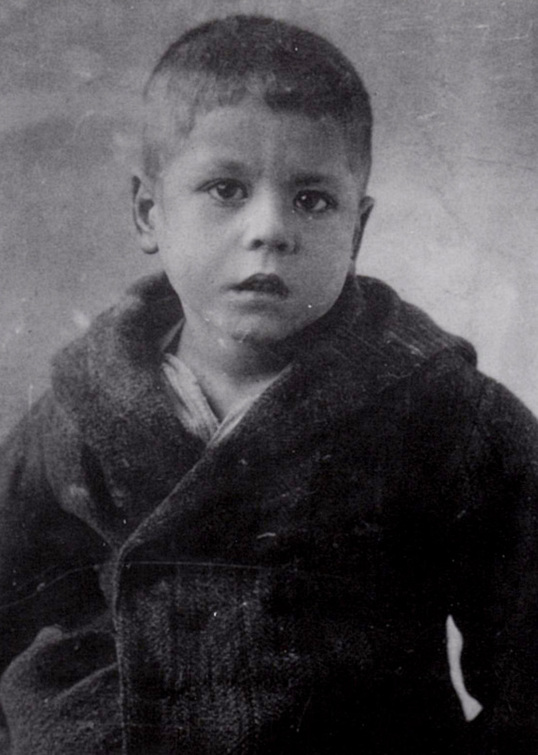
The Child Migration Scheme, a little known dark spot in Canadian history
Commencing in the 1860’s and continuing into the 1920’s, Canada took in some of England’s most impoverished and despondent children by way of the child migration scheme. During those sixty or so years, it is estimated that upwards of 100,000 children landed in Canada via a number of different organizations including church groups, private agencies and individual philanthropists. Although the scheme was promoted as an act of charity, many if not most of these children were neglected and abused in one way or another at the hands of the very people that were charged with caring for them. Some died from mistreatment and many committed suicide. One 'Home Child' was quoted in a book on the subject, equating the scheme to child slavery.
These waifs and strays were sent over on passenger ships in large groups, usually separated from fare paying customers and many times under deplorable conditions at sea. Once in Canada, these young immigrants known as ‘Home Children’ were housed in orphanages until they were eagerly claimed (indentured) by farmers to work in fields, tend livestock and toil as domestic servants. Although there were stipulations placed on the prospective care givers intended to protect the child’s welfare, there was no reliable process in place to follow-up after the child left the orphanage. Often times the organization that brought the child over had little or no contact with him or her again after they were placed. If they did, it was usually to remove a child deemed unacceptable and no longer wanted by the sponsor.
Scores of children were removed from England without their family’s permission or knowledge. As adults, many home children attempted to trace their roots back to England only to be told that their records were not available to them. They weren’t considered Canadian or British citizens and couldn’t even apply for a passport.
Today, many descendants of these home children are still trying to trace their ancestry. Although information is now more readily available, it is still a struggle. It is estimated that 1 out of every 8 Canadians are descended from the child migration scheme.
Commencing in the 1860’s and continuing into the 1920’s, Canada took in some of England’s most impoverished and despondent children by way of the child migration scheme. During those sixty or so years, it is estimated that upwards of 100,000 children landed in Canada via a number of different organizations including church groups, private agencies and individual philanthropists. Although the scheme was promoted as an act of charity, many if not most of these children were neglected and abused in one way or another at the hands of the very people that were charged with caring for them. Some died from mistreatment and many committed suicide. One 'Home Child' was quoted in a book on the subject, equating the scheme to child slavery.
These waifs and strays were sent over on passenger ships in large groups, usually separated from fare paying customers and many times under deplorable conditions at sea. Once in Canada, these young immigrants known as ‘Home Children’ were housed in orphanages until they were eagerly claimed (indentured) by farmers to work in fields, tend livestock and toil as domestic servants. Although there were stipulations placed on the prospective care givers intended to protect the child’s welfare, there was no reliable process in place to follow-up after the child left the orphanage. Often times the organization that brought the child over had little or no contact with him or her again after they were placed. If they did, it was usually to remove a child deemed unacceptable and no longer wanted by the sponsor.
Scores of children were removed from England without their family’s permission or knowledge. As adults, many home children attempted to trace their roots back to England only to be told that their records were not available to them. They weren’t considered Canadian or British citizens and couldn’t even apply for a passport.
Today, many descendants of these home children are still trying to trace their ancestry. Although information is now more readily available, it is still a struggle. It is estimated that 1 out of every 8 Canadians are descended from the child migration scheme.